
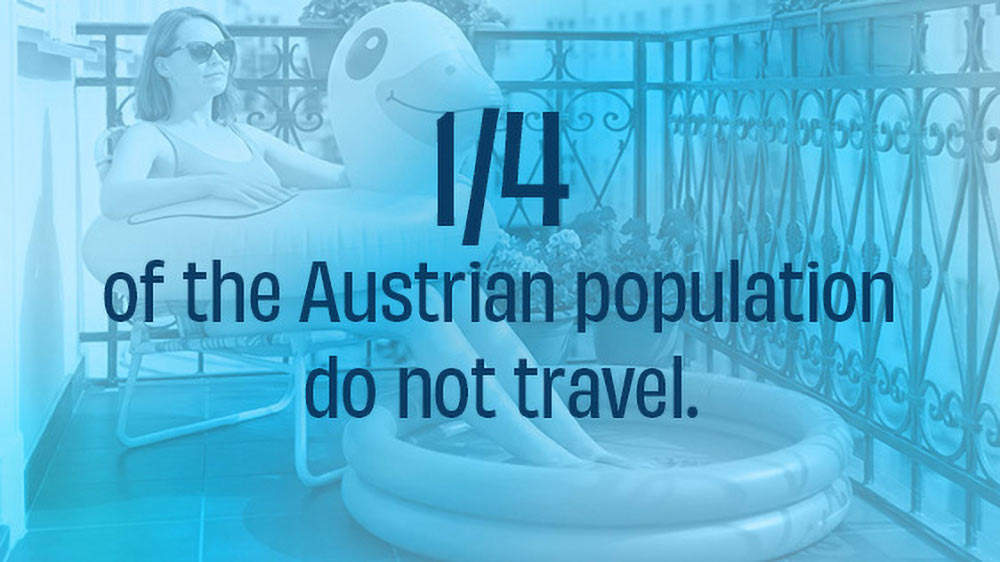
According to Statistik Austria, it is impossible for 25% of the Austrian population to personally get to know other countries: they do not travel. Meanwhile, the public service mandate aims to promote an understanding of European integration. The ORF addresses this not only with the largest network of correspondents but also with many other program contents, be they sports broadcasts, documentaries, or reports.
Regardless, it is true that public service media can strengthen the European idea, as Stephanie Schiedermair from the University of Leipzig explains. "Across Europe, where media landscapes are diverse and political pressure points vary, strong public media act as a stabilizing force. They bridge regions, generations, and communities; they provide citizens not only with information but also with a way to understand, question, and influence the societies they live in. (ORF Public Value - Bericht) Michelle Roverelli from the European Broadcasting Union describes the situation in PUBLIC VALUE TEXTE as follows: "Public service media has existed for over 100 years, and the EBU for 75 years. In 90% of European countries, public service broadcasters are the most trusted news source. This is no accident. It is the result of an investment in building independence, information reliability, and news quality. When things get serious, people turn to public service media. But we cannot rely on past achievements. We need to reach people, especially younger audiences, where they are. This means investing in digital, responsibly using AI, and telling stories in new, fresh, creative ways. We also need to be more transparent to show how we work and why we are trustworthy and to develop initiatives such as "Eurovision Spotlight," a fact-checking tool for public service broadcasters in Europe, or the "European Perspectives" project of the EBU, which will offer more than 10,000 trustworthy news items in a digital newsroom in 2024 alone."
"Europe-Integration" as a Public Value Category
This category documents ORF's performance in Europe reporting, corresponding reports and documentaries, European film, co-productions, ARTE, 3sat, and in relation to the EBU. The category is based on the following passages from ORF regulations:
European Convention of Human Rights
Article10 (1): Freedom of expression. Everyone has the right to freedom of expression. This right includes the freedom to hold opinions and to receive and impart information and ideas without interference by public authorities and regardless of frontiers. Amsterdam Protocol Public service broadcasting is directly linked in the member states to the democratic, social, and cultural needs of each society and the need to maintain media pluralism.
ORF Law
§ 4. (1) The Austrian Broadcasting Corporation shall ensure the promotion of understanding for European integration. (4) In particular, broadcasts in the fields of information, culture, and science shall be distinguished by high quality.
§ 10. (4) Comprehensive information should contribute to free individual and public opinion formation in the service of the informed citizen and thus to the democratic discourse of the general public.
ORF Program Guidelines
For Austria, integration into Europe, the relationship with its neighbors, and its connection to this cultural area are essential components of its identity. A Europe without borders, where commonality is at the forefront, does not contradict a Europe of regions.
ORF Quality Profile
Offers on culture and religion, especially movies, series, radio, and internet features and broadcasts, serve the function of being windows to the world, i.e., making Austrian cultural or religious life known and visible abroad and vice versa, showing international, especially European, in Austria.
ORF Mission Statement
ORF is the "Austrian orientation guide" in the national and international diversity of digital media. Thus, it contributes to European integration.
Figures & Data
Below you will find exemplary numbers documenting the fulfillment of the public service mandate and the associated media quality. (Figures & Data only available in german.) Further information can be found in the ORF's annual report to the Federal Chancellor and regulatory authority, the transparency report, the business and sustainability report, as well as the reports on equality (ORF Public Value - DOCUMENTS), the action plan for accessibility, or the annual and consolidated financial statements of ORF.
Exemplary Figures
Contributions about Europe
Treffer im TV-Archiv
| Deutschland | 1.711 |
| Frankreich | 1.385 |
| Großbritannien | 955 |
| Italien | 1.258 |
| Liechtenstein | 45 |
| Russland | 645 |
| Schweiz | 618 |
| Slowakei | 107 |
| Slowenien | 159 |
| Tschechien | 63 |
| Ukraine | 1.170 |
| Ungarn | 287 |
3sat
3sat in Zahlen
| Durchschnittliche Tagesreichweite an Zuseher:innen von 3sat in Österreich | 471.000 |
| Programmminuten und Anteil am Gesamtprogramm aus Österreich (ORF-Programmminuten) | 130.850 |
| ORF-Anteil am Gesamtprogramm | 25,3% das sind durchschnittlich mehr als 6 Stunden pro Tag |
3sat Thementage
| Thementage auf 3sat | 30 |
| Davon ORF koordiniert | 4 |
| Durchschnittliche Tagesreichweite | 515.000 |
ORF-kuratierte 3sat-Thementage
| Titel | Datum | Zuseher:innen in Tsd. |
| Der Traum vom Süden | 12.10. | 686 |
| Tirol – Zwischen Himmel und Erde | 29.05. | 645 |
| Österreichs Wasserwelten | 26.10. | 596 |
| Höhenrausch | 22.06. | 535 |
Auswahl der neuproduzierten Dokumentationen – Top 3
| Titel | Datum | Zuseher:innen in Tsd. |
| Triest – Stadt der vielen Namen | 31.03. | 120 |
| Österreichs schönste Täler – Das Lafnitztal | 14.07. | 113 |
| Königliche Gärten – Schloss Schönbrunn | 24.11. | 96 |
ARTE
ORF is the most important associated co-partner of ARTE by volume.
| Durchschnittliche Tagesreichweite von ARTE in Österreich | 355.000 |
| Sprachen | 6 |
| Meistgesehene Sendung | Ingo Thiel – „Die Frau ohne Gesicht“ 21.11. ?135.000 Durchschnittsreichweite |
Anteil europäischer Werke am TV-Programm
ORF 1 und ORF 2
| ORF 1 Stunden % |
ORF 2 Stunden % |
ORF gesamt Stunden % |
|
| Gesamtsendezeit | 8.761 | 10.156 | 18.916 |
| Tägliche Sendezeit in Stunden | 24 | 28 | 52 |
| Quotenbasis | 6.953 100% |
7.513 100% |
14.466 100% |
| Europäische Werke | 4.918 70,7% |
7.389 98,4% |
12.307 85,1% |
| Europäische Werke unabhängiger Hersteller | 4.500 64,7% |
4.051 53,9% |
8.551 59,1% |
| Neue Werke von europäischen unabhängigen Herstellern | 2.298 33,1% |
2.593 34,5% |
4.891 33,8% |
| Neue Werke in % von Werken unabhängiger Hersteller | 51,1% | 64,0% | 57,2% |
